
Home Care Beds: Maximize Safety, Comfort, and Independence
December 10, 2025 2025-12-10 10:11Home Care Beds: Maximize Safety, Comfort, and Independence
Home Care Beds & Patient Support Equipment

The paradigm of patient care is undergoing a profound transformation, shifting from institutionalized settings to the comfort and familiarity of the home. This change is driven by a deep-seated desire for patient dignity, personal autonomy, and a higher quality of life. In this new era of home-based care, the home environment itself becomes an extension of the medical facility, and the right equipment is no longer a luxury but a fundamental necessity. A well-equipped home care setting serves as a sanctuary for recovery and long-term wellness, significantly enhancing the safety, independence, and overall well-being of the individual under care.
This guide is designed to provide an exhaustive and authoritative overview of the essential home care beds and patient support equipment. It moves beyond simple product descriptions to explain the critical role each item plays in a holistic care plan. The selection of home care equipment is a deeply personal and often clinically-driven decision, and understanding the foundational principles behind these choices is paramount. The following sections will serve as a definitive resource, demystifying the various options and positioning the right equipment as a critical investment in a safer, more comfortable, and more empowering home care journey.
Adjustable Hospital Beds: The Foundation of Home Care
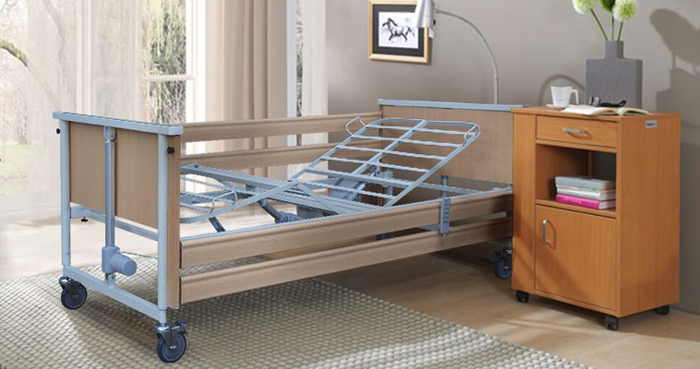
Adjustable Home Care Beds are the cornerstone of a functional and safe home care setup, providing more than just a place to rest. They are expertly engineered to adapt to a patient’s specific medical needs, offering a level of support and adaptability that standard beds cannot match. Their ability to adjust height and position is a critical feature that enables everything from improved circulation to easier transfers, significantly enhancing the quality of daily life for both the patient and their caregiver. By facilitating frequent changes in position, these Home Care Beds directly address common medical challenges such as the risk of pressure sores and complications from poor circulation. The proper use of a home care bed can therefore be viewed not merely as a matter of convenience, but as an integral part of a proactive therapeutic strategy.
The true value of a home care bed lies in its ability to function as a dynamic therapeutic device. The various adjustable features, such as the ability to raise the head and foot sections, serve a direct clinical purpose. For instance, elevating the head can provide relief for individuals experiencing respiratory distress or difficulty breathing, while raising the foot of the bed can help reduce swelling and improve venous return in the lower extremities. The ability to adjust the bed’s overall height also serves a critical function in fall prevention; a low-height setting can minimize the risk of injury if a patient accidentally rolls out of bed, while a higher setting can reduce the physical exertion required for a caregiver to assist with transfers or provide care. These deliberate design features transform the bed from a simple piece of furniture into a crucial element of a comprehensive and preventative medical plan.
Electric Beds
Electric beds represent the pinnacle of convenience and functionality in the realm of home care. They operate using quiet, powerful motors that allow for remote-controlled adjustments of the head, foot, and overall height of the bed. This technology eliminates the physical strain required to make changes, empowering both the patient and the caregiver with effortless control. A remote control puts a wide range of positions at the patient’s fingertips, promoting a sense of independence and autonomy.
Beyond basic adjustments, advanced electric beds come equipped with specialized features designed for a wide array of clinical needs. The ability to achieve the Trendelenburg and reverse Trendelenburg positions, for example, is a critical function for specific medical conditions. The Trendelenburg position, where the head is lower than the feet, is sometimes used in medical settings to treat shock or low blood pressure, while its reverse counterpart, with the head elevated, is often recommended for patients with gastric reflux or specific respiratory conditions. Other essential features of modern electric Home Care Beds include a battery backup system, which ensures continued functionality during a power outage, and lockable casters that prevent the bed from moving accidentally, thereby providing a stable and secure platform for transfers and repositioning.
Manual Beds
Manual beds offer a reliable and cost-effective alternative to their electric counterparts. Unlike electric models, they rely on hand cranks to adjust the bed’s position and height. While this requires physical effort, manual Home Care Beds are known for their durability and low maintenance requirements, making them a suitable choice for scenarios where constant adjustments are not necessary or where the budget is a primary consideration. The simplicity of their design ensures long-term reliability without the complexity of electronic components.
The choice of a manual bed is most appropriate for patients with minimal repositioning needs or for home care situations where a caregiver is consistently available and physically able to operate the hand cranks. The physical exertion required for adjustments must be a primary consideration, as frequent use can lead to caregiver fatigue and potential musculoskeletal injuries. When weighing the benefits of a manual bed, it is crucial to assess the long-term physical demands it will place on the primary caregiver to ensure the sustainability of the home care plan.
Overbed Tables
An overbed table is a simple yet indispensable accessory that dramatically enhances the functionality of any home care bed. Its U-shaped or C-shaped base allows it to slide underneath the bed and position a stable surface directly over the patient’s lap. This provides a convenient and versatile workspace for a wide range of activities that would otherwise be difficult or impossible to perform in a bed.
The primary functions of an overbed table are numerous. It serves as a secure surface for eating meals, enabling the patient to dine in comfort and with dignity. It is also an ideal platform for leisure activities such as reading, writing, or using a laptop, allowing the patient to remain engaged in their hobbies and work. Furthermore, the table can be used to keep essential medical supplies, remote controls, or call buttons within easy reach, reducing the need for the patient to strain or reach for items. Key features to look for in a quality overbed table include adjustable height and a tiltable surface, which ensures it can be adapted to various uses and patient positions.
Patient Transfer & Lifting Aids: Ensuring Safety and Dignity
Safe patient transfers are a critical, and often physically demanding, aspect of home care. The wrong technique or a lack of proper equipment can lead to serious injuries for both the patient and the caregiver, including falls for the patient and debilitating back injuries for the caregiver. Patient transfer and lifting aids are expertly designed to mitigate these risks, providing a secure and controlled method for movement. The implementation of these aids not only prevents physical harm but also promotes a sense of dignity for the patient by facilitating smooth and respectful movements, thereby preserving their autonomy and comfort.
The value of transfer aids extends far beyond the physical act of preventing injury. By making transfers less of a struggle, these devices alleviate the significant emotional tension and anxiety that can often characterize caregiving relationships. The physical strain associated with manual transfers can lead to caregiver burnout and frustration, which can in turn negatively impact the patient’s emotional well-being. When a patient can be moved with dignity and minimal effort, it removes a major source of stress from the caregiving dynamic. This positive ripple effect contributes to a more harmonious home environment and ultimately improves the quality of life for all involved, safeguarding the long-term sustainability of the home care plan.
Hoists (Patient Lifts)
Hoists, also known as patient lifts, are mechanical devices used to safely lift and transfer a patient who cannot bear their own weight. They are an essential tool for preventing caregiver back injuries, which are a common consequence of repeated manual lifting. The use of a hoist transforms a potentially dangerous and physically demanding task into a controlled and secure procedure.
There are two primary types of hoists commonly used in home care settings. Mobile or floor hoists are wheeled units that are portable and can be moved between different rooms, making them a versatile and popular choice for home use. Ceiling hoists, on the other hand, are permanently installed on a track system in the ceiling, offering a superior range of motion and requiring no floor space for operation. Both types provide a smooth and effortless transfer experience. When selecting a hoist, it is crucial to consider the patient’s weight, as hoists have specific weight capacities that must be adhered to for safety.
Transfer Chairs
A transfer chair is a highly versatile piece of equipment that functions as both a wheelchair and a transport device, streamlining short-distance movements within the home. It is expertly designed for tasks such as moving a patient from their bed to a dining area or from the bed to the bathroom. The chair’s compact and maneuverable design makes it ideal for navigating the tighter spaces of a residential setting.
Transfer chairs are equipped with key safety features, including lockable wheels that ensure stability during the transfer process and an adjustable height mechanism that allows for seamless alignment with beds, toilets, or other furniture. Their dual functionality eliminates the need for multiple pieces of equipment, providing an efficient and practical solution for caregivers. By combining the benefits of a mobility aid and a transfer device, transfer chairs simplify the daily routine and reduce the need for manual lifting, thereby improving safety and convenience.
Slings
Slings are a critical component of a hoist system, serving as the essential interface between the patient and the lifting device. They are fabric supports that are meticulously designed to cradle the patient’s body during a transfer, ensuring both safety and comfort. The proper selection and use of a sling are paramount to the success of a transfer and the prevention of injury.
Slings come in various types, each designed for a specific purpose. Universal or full-body slings are the most common and are used for general transfers from a seated or lying position. Toileting slings are specifically designed with an opening to facilitate toileting and hygiene, while transfer slings are smaller and used for targeted tasks, such as repositioning a patient in bed. The selection of the correct sling is a crucial step in the transfer process; it must be compatible with the specific hoist model, correctly sized for the patient’s body shape and weight, and chosen according to the type of transfer being performed. The use of a mismatched or improperly sized sling can cause discomfort and, in a worst-case scenario, lead to a fall.
Pressure Relief & Comfort: Maintaining Skin Integrity and Wellness
For individuals who spend significant periods of time in a bed or a chair, the risk of developing pressure ulcers, commonly known as bedsores, is a serious concern. These painful and dangerous sores are caused by prolonged pressure on the skin, which can restrict blood flow and lead to tissue damage. Pressure relief equipment is a proactive and indispensable component of long-term care, engineered to redistribute body weight and maintain the integrity of the skin. The strategic use of these items is not merely about comfort; it is a clinical necessity for the prevention of a major health complication.
The selection of pressure relief equipment is a direct clinical response to a patient’s specific risk profile. A patient’s susceptibility to pressure ulcers is influenced by a range of factors, including immobility, poor nutrition, and chronic illnesses. Recognizing these risk factors is the first step in a data-driven approach to care. By understanding the level of risk, one can select the appropriate pressure-relieving technology that provides the necessary level of protection. This systematic approach transforms the purchasing decision from a simple transaction into a vital part of a patient’s medical management plan, reinforcing the understanding that the right equipment is an essential part of a preventative health strategy.
Mattresses
Pressure-relieving mattresses are meticulously engineered to prevent skin breakdown by actively managing pressure, shear, and friction. They are classified based on their technology and the level of risk they are designed to mitigate. This classification provides a clear and professional framework for selecting the most appropriate mattress for a patient’s needs.
- Static Foam Mattresses: These are suitable for patients with a low-to-moderate risk of developing pressure ulcers. They utilize high-density foam that conforms to the body’s contours, evenly distributing weight and providing a cost-effective, passive preventative measure.
- Alternating Pressure Mattresses: Designed for patients with a moderate-to-high risk of skin breakdown. These mattresses feature inflatable air cells that cyclically inflate and deflate, continuously shifting pressure points on the patient’s body. This dynamic action stimulates blood flow and prevents prolonged pressure on any single area, thereby actively reducing the risk of skin damage.
- Low Air Loss Systems: These advanced systems are reserved for patients with a high-to-severe risk of pressure ulcers. They use a pump to gently circulate a small amount of air beneath the patient, which helps to keep the skin dry and cool. This technology is particularly effective at reducing friction and moisture, two key contributors to skin breakdown.
Cushions
Pressure-relief cushions serve a function similar to that of mattresses but are designed for use in wheelchairs, recliners, or other seating. They are crucial for patients who spend long periods in a seated position, helping to prevent the development of pressure sores on the buttocks and tailbone. These cushions work by redistributing pressure and providing a supportive, comfortable surface.
Cushions are available in various materials, each offering a different level of pressure relief. Foam cushions are simple, lightweight, and cost-effective, making them suitable for low-risk scenarios. Gel cushions conform to the body’s shape, providing a high level of pressure redistribution. Air cushions, which utilize inflatable air cells, offer the highest level of pressure relief and can be adjusted to the patient’s specific needs.
Positioning Aids
Positioning aids are an essential category of accessories used to maintain proper body alignment and support specific limbs or joints for individuals with limited mobility. They work in tandem with pressure-relieving mattresses and cushions to prevent pressure on bony prominences and to reduce the risk of contractures, which are a permanent shortening of a muscle or joint.
Examples of positioning aids include wedges, pillows, and bolsters. Wedges and specialty pillows are used to elevate and support parts of the body, such as the legs or back, which can improve circulation and reduce pressure on vulnerable areas. Bolsters provide support and stability for the torso or limbs, especially for patients who are unable to maintain a stable position on their own. These simple but effective tools are critical for enhancing patient comfort and are a key part of a comprehensive pressure management strategy.
Making the Right Choice: A Guide for Patients and Caregivers
Selecting the right home care equipment can be a complex and often overwhelming process. The best equipment is not just the most expensive or feature-rich option; it is a holistic solution that is meticulously tailored to individual needs.
The first and most crucial step in this process is to consult with a healthcare professional, such as a doctor, physical therapist, or occupational therapist. They can provide a professional assessment of the patient’s mobility, risk factors, and specific clinical needs, which serves as a foundation for all subsequent equipment decisions. This consultation is particularly important when considering pressure relief, as a professional can accurately determine the patient’s risk level and recommend the most suitable mattress or cushion.
It is also essential to assess not only the patient’s current needs but also their potential future trajectory. While a manual bed might be sufficient today, investing in a more adjustable electric bed might be a more prudent long-term solution if the patient’s mobility is expected to decline. This forward-thinking approach ensures that the equipment remains a valuable asset as care needs evolve.
Finally, the caregiver’s needs must be given equal consideration. The ease of use of the equipment is just as important as the patient’s comfort and safety. Equipment that reduces physical strain, such as a hoist, protects the caregiver’s health and helps prevent burnout, which is crucial for ensuring the long-term sustainability of the home care plan.
Conclusion: Empowering Home Care, One Piece of Equipment at a Time
Home care beds and patient support equipment are more than just products; they are essential tools that empower individuals to live with greater comfort, safety, and independence in the familiar setting of their home. Each piece of equipment, from the foundational support of an adjustable bed to the safety provided by hoists and the vital protection of pressure relief systems, plays a crucial and interconnected role in a comprehensive care plan. The careful selection of these items is an investment in quality of life for the patient and a significant reduction in the physical and emotional burden on caregivers.
Understanding these options is the first step toward a more comfortable and dignified home care journey. We are committed to providing expert guidance and high-quality solutions tailored to your unique needs. We invite you to explore our comprehensive range and find the perfect equipment to support you or your loved one. Contact turquoise for more options.


